Why You Can’t Sleep
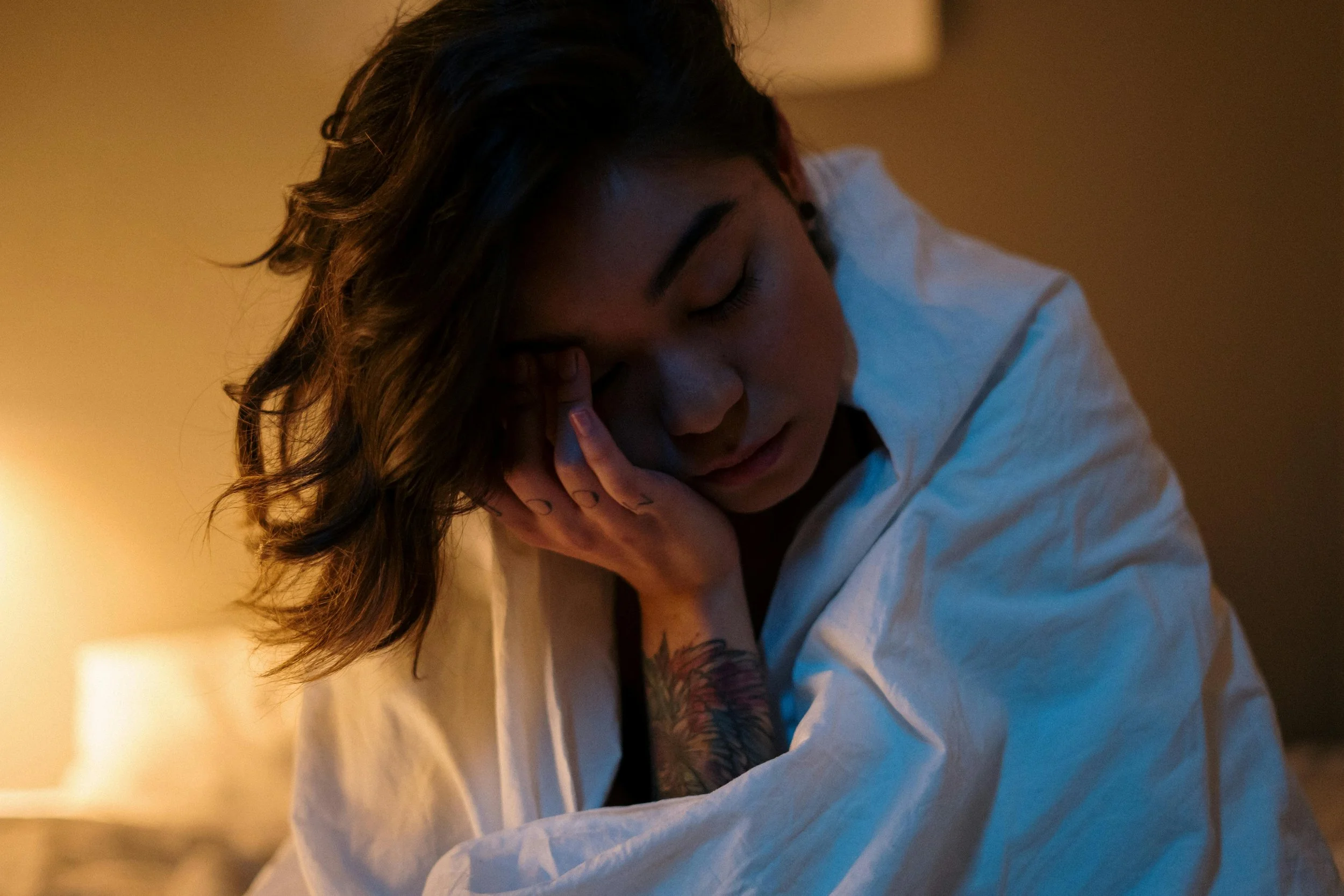
Source: cottonbro / pexels
Few everyday experiences are as satisfying as a good night’s sleep. And when it eludes us, night after night, we can start to form bad sleep habits out of desperation. As a psychologist working with patients with sleep difficulties, I’ve found that many folks have heard the conventional wisdom of sleep hygiene (i.e., don’t scroll tiktok right before bed, keep the bedroom as dark as possible), but fewer understand the major behavioral and emotional factors that may be interfering with their current sleep. Understanding a few of these common problems—and identifying which may be impacting you—can help you make changes to improve your sleep quality.
Reason #1: Your Sleep Drive Is Low
The term “sleep drive” refers to our biological urge to sleep. Sleep drive functions similarly to hunger: As time passes since your last meal, you become progressively hungrier, and as time passes since your last sleep, you build a progressively higher sleep drive. We fall asleep best when our sleep drive is very high. Napping throughout the day weakens the sleep drive, just like snacking weakens hunger. Even if you are able to fall asleep easily after a day that included a lengthy afternoon snooze, you are more likely to wake up after just a few hours because your sleep drive may not be high enough to keep you asleep throughout the entire night. Similarly, you may be tempted to sleep in after a night of tossing and turning, but your sleep drive won’t have time to build sufficiently during the day if you wake up late—which could lead to more difficulties sleeping the next night.
How to build your sleep drive: Avoid napping whenever possible (or keep naps to 30 minutes within the first half of your day), don’t sleep in past your regular wake-up time, and stay active during the day.
Reason #2: Your Internal Clock (or Circadian Rhythm) Is Out of Sync With Your Schedule
Our bodies cycle through changes on a roughly 24-hour basis. For example, our average core body temperature can shift as much as a full degree Fahrenheit (.5 degree Celsius) throughout the day and tends to be lowest at around 4 a.m. and highest at around 6 p.m. Our hormone production also shifts on a 24-hour cycle, which can impact our levels of alertness or sleepiness. Each person’s circadian rhythm is influenced by their own unique genetics. Some of us naturally have an earlier chronotype—meaning that our bodies naturally fall asleep and wake up earlier—and others have a later chronotype. Generally, we sleep best when our sleep schedule is regular and aligned with our circadian rhythm. If you are trying to force yourself to sleep between 9 p.m. and 5 a.m.—but your body naturally syncs best to a 11 p.m. to 7 a.m. sleep schedule—you will likely not sleep as well. Likewise, shift work (work that requires overnight labor) is associated with poorer sleep for most people due to misalignment with their circadian rhythm.
How to regulate your circadian rhythm: Wake up at the same time every morning, keep a regular daily schedule, and seek employment that allows you to sleep in alignment with your circadian rhythm.
Reason #3: You Have a High Level of Emotional Arousal
Would you be able to sleep if you could hear a tiger scratching and growling behind your bedroom door? Probably not, because our bodies respond to a potential threat with fear, which includes physiological arousal. You might experience tension in your muscles, notice your heart pounding faster, or feel yourself sweating through your pajamas. Unfortunately, our bodies respond to day-to-day stressors similarly to the threat of a wild animal—whether those stressors include a presentation you have for work tomorrow, a bill you can’t afford this month, or an argument brewing with your partner. We don’t fall asleep easily when we are in a state of emotional arousal. Over time, feeling stressed in bed can lead to negative associations. In the case of chronic insomnia, one can get so used to tossing and turning that even climbing into bed brings on a sense of stress. Have you ever woken up from dozing on the couch, climbed into bed, and then found yourself suddenly wide awake? This might be because you have developed an association between being in bed and feeling anxious. Improving sleep requires breaking this association and creating a new mental pairing: of feeling sleepy whenever you are in bed.
How to calm emotional arousal: Engage in relaxing or soothing activities in the hour before your normal bedtime, and wait until you feel very sleepy to get into bed. If you wake up in the night and lie awake for more than 20 minutes, get out of bed and do a calming activity in a cozy, dimly lit area until you feel sleepy again. Practicing progressive muscle relaxation can help bring on sleepiness.
Reason #4: You Rely on Alcohol or Caffeine to Regulate Sleep
I frequently hear patients say that they don’t drink heavily, but they do depend on a “nightcap” to settle for sleep at night. Unfortunately, this is a double-edged sword, because alcohol’s initial sedating effect recedes within a few hours of sleep. Humans tend to sleep in a fragmented, restless fashion while metabolizing alcohol. So even if you fall asleep more easily, you are more likely to wake up during the night, and less likely to get high-quality sleep after even just one glass of wine. At the other end of the spectrum, caffeine is a stimulant that many folks rely on to remain alert during waking hours (and yes, I’m guilty of that one). Although the metabolism rate for caffeine varies by individual, the half-life of caffeine for the average adult is about four to five hours—meaning that if you consume 100 mg of caffeine in a large cup of coffee at 12 p.m., 50 mg will remain in your system at 5 p.m., and 25 mg will remain in your system at 10 p.m.
How to avoid substance-related sleep interference: Finish your last cup of coffee at least nine hours before bed. If you use a standard pre-workout caffeine supplement, finish it within 13 hours of your normal bedtime. Avoid any alcohol use within four hours of your standard bedtime, and focus on relaxation techniques (such as taking a warm bath, stretching, or doing progressive muscle relaxation) to calm your mind and body before bed.
These recommendations, based on cognitive behavioral therapy for insomnia (CBT-I) are covered in more detail in my blog post about harnessing biobehavioral processes for higher quality sleep. If you are experiencing significant daily distress or impairment from regular lack of sleep, seek out a physician or licensed mental health professional to find out if CBT-I, or another evidence-based treatment for insomnia, may be a good fit for you.
Interested in Cognitive Behavioral Therapy for Insomnia? Read more about the therapy or get in touch.
Note: A version of this post has been previously published on Dr. Hylton Jean’s Psychology Today Blog, Mapping Your Mental Health Journey.
References
Colrain, I. M., Nicholas, C. L., & Baker, F. C. (2014). Alcohol and the sleeping brain. Handbook of clinical neurology, 125, 415–431. https://doi.org/10.1016/B978-0-444-62619-6.00024-0
Del Bene VE. Temperature. In: Walker HK, Hall WD, Hurst JW, editors. Clinical Methods: The History, Physical, and Laboratory Examinations. 3rd edition. Boston: Butterworths; 1990. Chapter 218. Available from: https://www.ncbi.nlm.nih.gov/books/NBK331/
Fowler, S., Hoedt, E. C., Talley, N. J., Keely, S., & Burns, G. L. (2022). Circadian Rhythms and Melatonin Metabolism in Patients With Disorders of Gut-Brain Interactions. Frontiers in neuroscience, 16, 825246. https://doi.org/10.3389/fnins.2022.825246
Gardiner, C., Weakley, J., Burke, L. M., Roach, G. D., Sargent, C., Maniar, N., Townshend, A., & Halson, S. L. (2023). The effect of caffeine on subsequent sleep: A systematic review and meta-analysis. Sleep medicine reviews, 69, 101764. https://doi.org/10.1016/j.smrv.2023.101764
Reddy, V.S., Shiva, S., Manikantan, S., Ramakrishna, S. (2024). Pharmacology of caffeine and its effects on the human body. European Journal of Medicinal Chemistry Reports, 10, 100138. https://doi.org/10.1016/j.ejmcr.2024.100138
Vitaterna, M. H., Shimomura, K., & Jiang, P. (2019). Genetics of Circadian Rhythms. Neurologic clinics, 37(3), 487–504. https://doi.org/10.1016/j.ncl.2019.05.002
